Knolling

  • Monolithic vs segmented table tops

    In this post, I wanted discuss my thoughts on table tops. As a father of five, the normal routine after school or work or shopping, is to enter the house and dump everything onto the counter or floor. This often leads to frantic morning searches for keys or homework, or late night panics to find that prescription that was filled after work.

    Dumping our things on a large surface certainly feels normal and instinctual even thought we know it leads to bad outcomes. I started asking what if we just eliminated large, open surfaces. And replaced them with segmented surfaces.
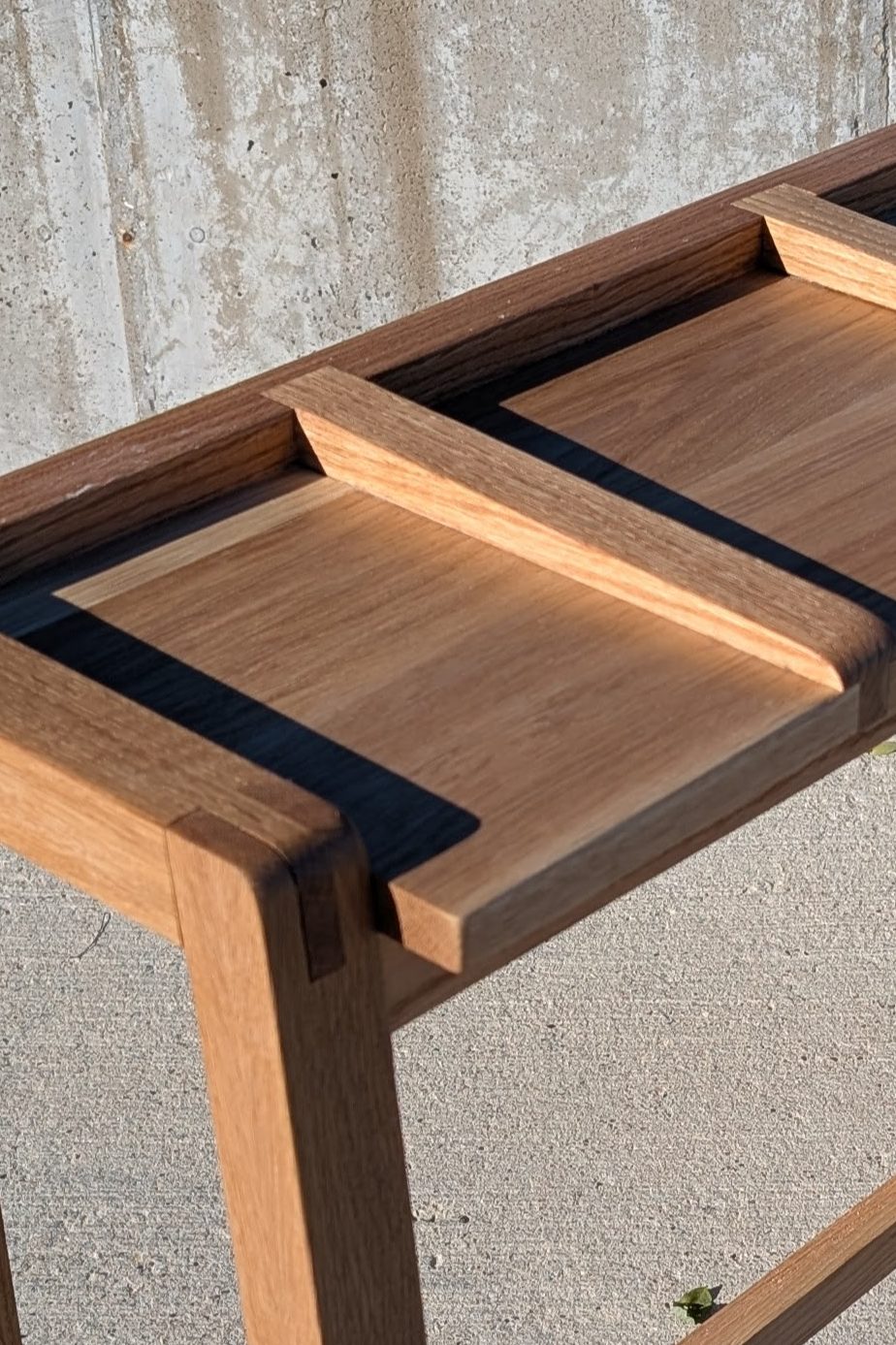
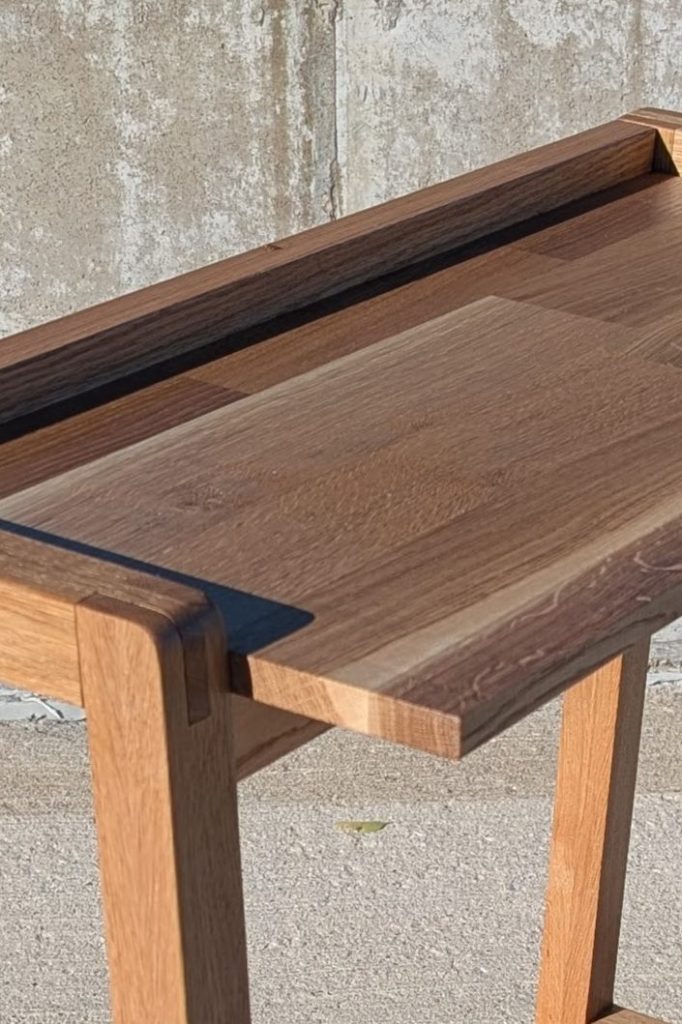
    Above I show the difference between a monolithic and a segmented top. The segmented top diminishes my natural instinct to dump everything into a pile. Instead, it promotes arranging my stuff because its surface is segmented. This practice is also called knolling or the act of arranging items beautifully.

    This does not seek to organize a room or house. It simply encourages a habit towards orderliness not chaos. To this end, I design and make knolling trays that break up large open surfaces.
    * * *

  • Practice knolling with wood rocks

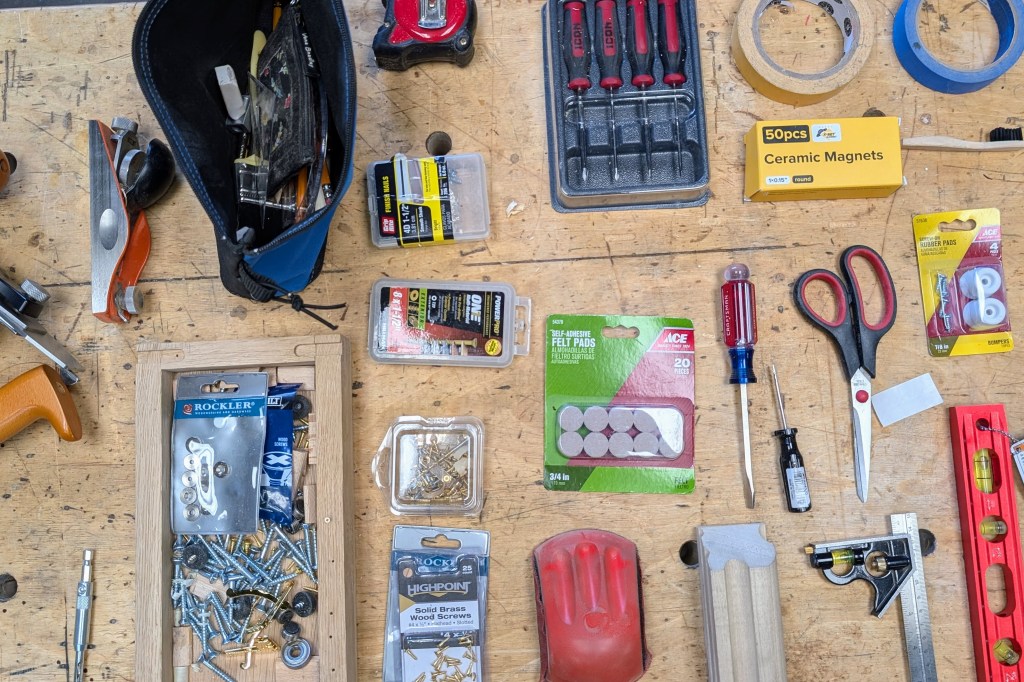
    The idea of knolling is simple: it’s the practice of arranging objects on a flat surface in a grid-like pattern to create visual harmony. Think of a perfectly organized toolbox or a beautifully laid-out workbench. It’s an act of ordering which makes me feel calm and focused.

    Knolling tools on a workbench.

    But what if you didn’t have to find order? What if I created it from scratch?

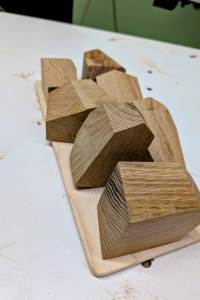
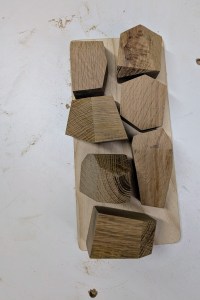
    I always have wood cut offs and found myself in the shop, cutting and sanding them into different shapes and sizes. It ended as a set of simple, smooth wooden “rocks.”

    Then I placed them on a small tray on my kitchen table, arranging them in a clean, grid.

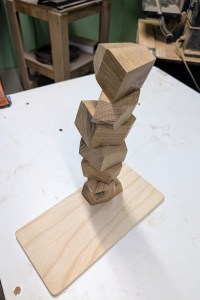
    When I felt overwhelmed or my handed needed to do something, I found myself going to the tray, knocking the rocks over, and then carefully balancing and stacking them.

    It was a tangible, low-stakes way to engage my hands and mind without the baggage of real-world tasks. I wasn’t trying to organize the chaos of my life; I was creating a temporary order.

    The prototype set I made for my daughter became a tool for her to play, calm down, and focus. Now, I’m developing a full set of Knolling Rocks to share with others. My hope is that they can be a simple, beautiful tool for anyone looking for a moment of calm and focus.

    The world is full of things to be done and problems to be solved. Sometimes, what we really need is a simple, beautiful problem we can solve with our own hands. Something we can knock over, rearrange, and put back together again—just for the joy of it.

    * * *