Knolling

  • Compact desk inspired by monks

    I have disliked my flat-packed, fast furniture computer desk for over twenty years and have drawn many desk ideas to replace it. My social media feeds are full of desk setup ideas and hacks, from gaming rigs to multi-monitor home offices.

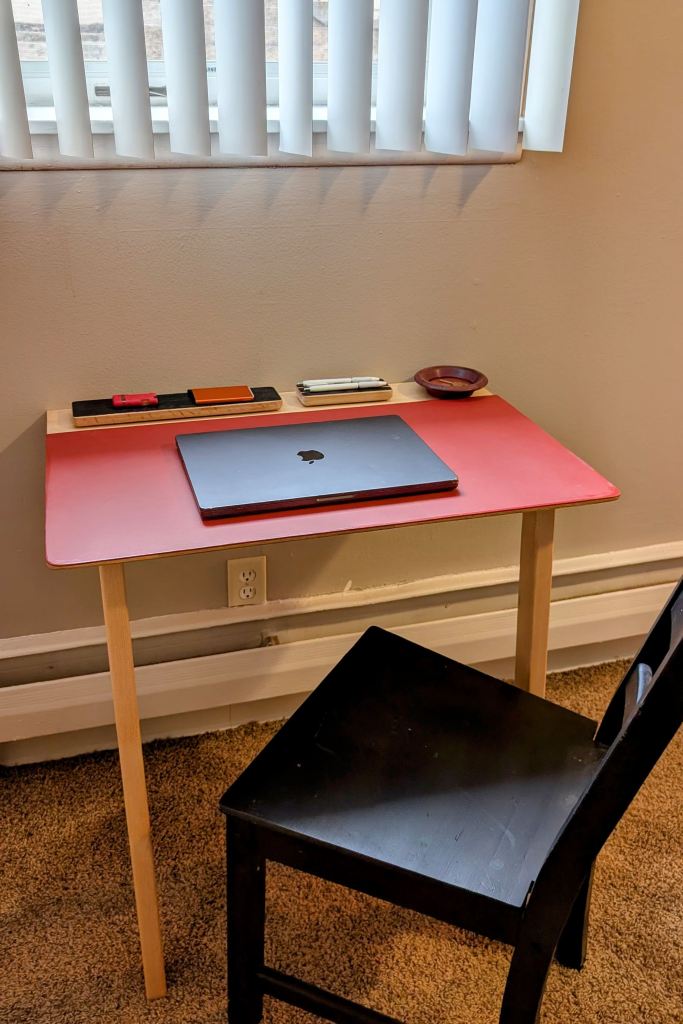
    I just recently gave up on complexity and settled on simplicity. The idea for this desk is to pare it down to its essentials. Inspired by lecterns and writing desks used by monks, I wanted just enough space to write, sketch, and use my laptop.

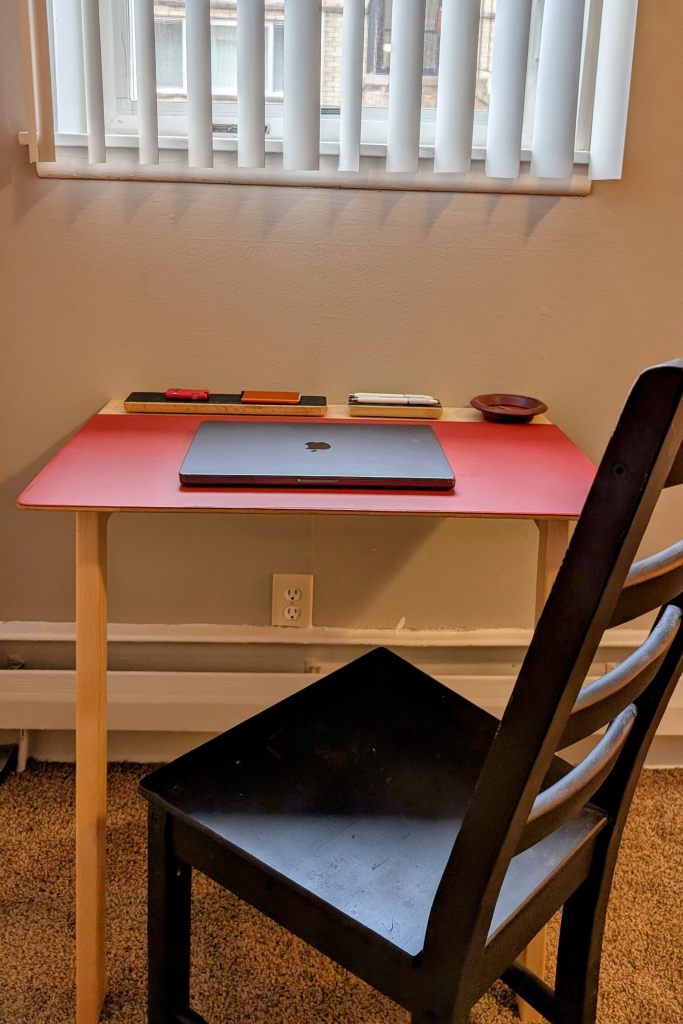
    This desk has only two legs tapered to lean against the wall for support. The back apron is wide, lays flat against, and provides more than enough stability for sketching, typing, and writing.
    It seems that all work furniture is engineered so you can sit down all day. This concept seems wrong, especially for someone who deals with ADHD hyperfocus, as it can lead to prolonged states of concentration without breaks, which can be counterproductive and exhausting.

    I wanted a desk that was designed to be used for a couple of hours but also encourages movement and change in perspective. This design features only a top and two legs, making it eminently portable. It can be easily moved to a new location. This flexibility not only inspires creativity but also promotes a dynamic working environment.

    This design was challenging. After 20 years of collecting ideas for desk features in notebooks, I found myself unable to create a replacement. I was overwhelmed by possibilities and realized I should only build what I needed.

    This compact desk is ideal for a dorm or apartment or small office, providing an efficient workspace without taking up too much room. Constructed from sturdy white maple, it ensures durability while maintaining a sleek aesthetic. The writing surface is elegantly covered with furniture linoleum, making it not only stylish but also easy to clean and maintain.

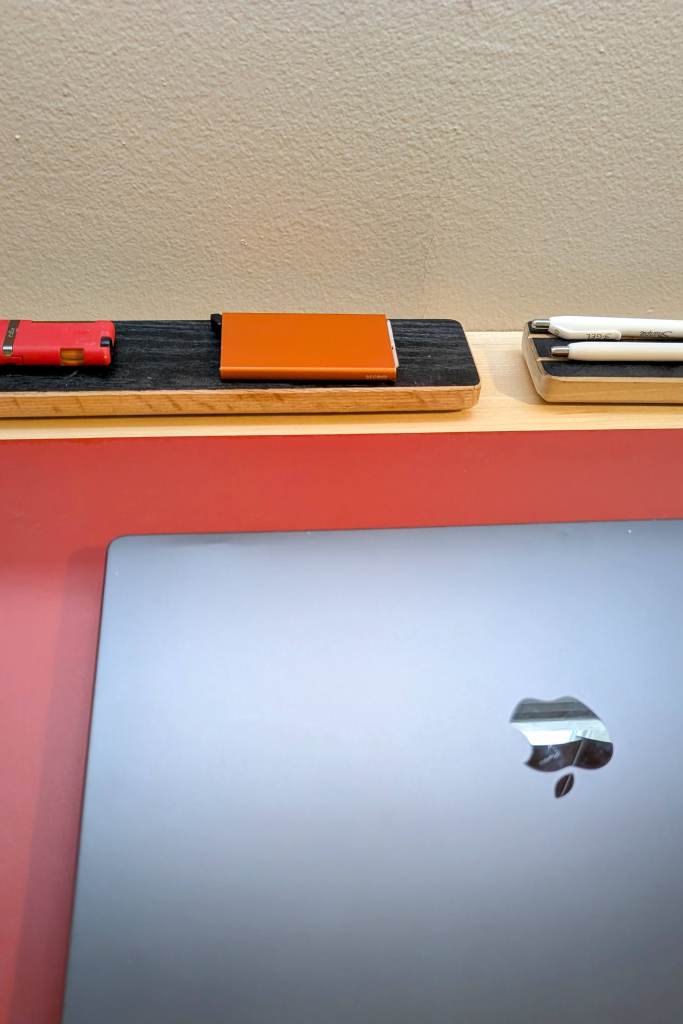
    While there are no drawers or trays integrated into the design, the back of the desktop is cleverly segmented off, offering a perfect spot for organization. I placed two knolling trays and a small bowl there, creating space for storing essential items like pens, notes, and other stationery. I believe limited storage focuses the mind.

    This thoughtful design makes it a practical addition to any small living or work space, encouraging productivity while keeping your essentials within easy reach.
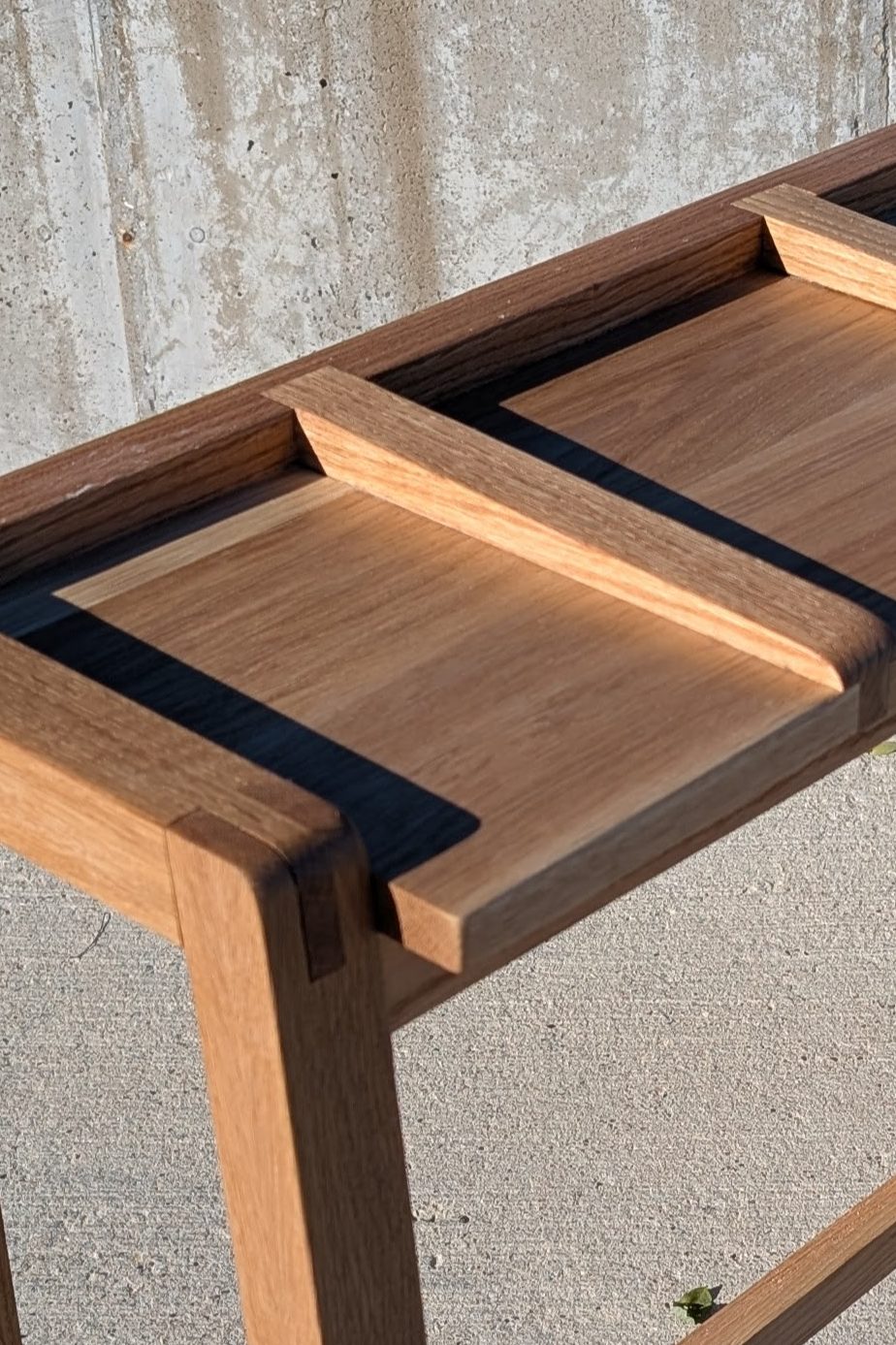
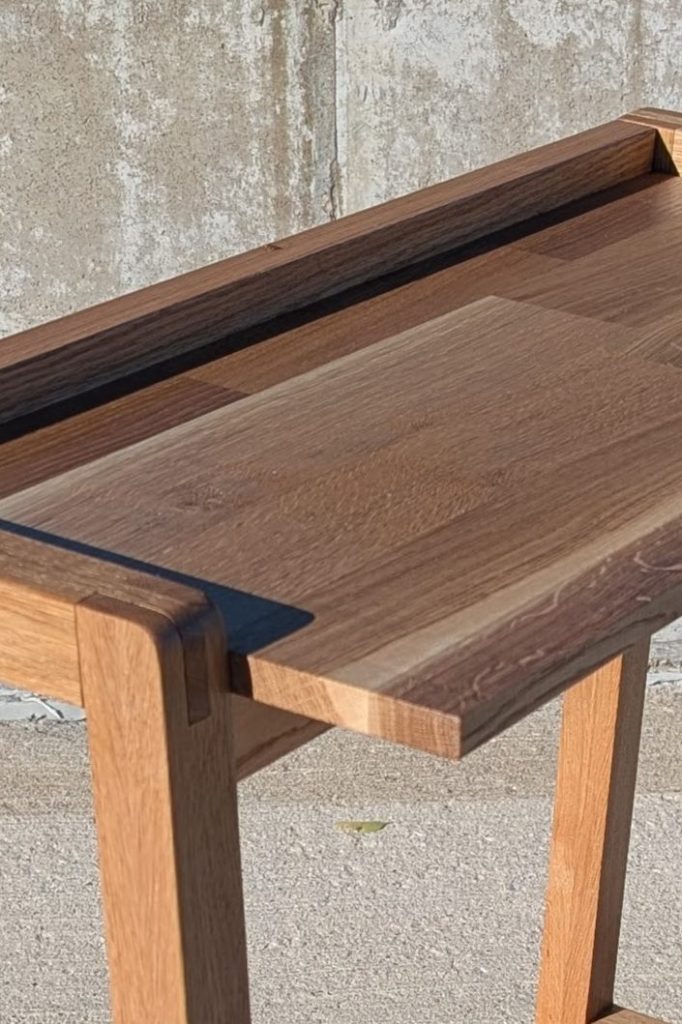
    * * *

  • Monolithic vs segmented table tops

    In this post, I wanted discuss my thoughts on table tops. As a father of five, the normal routine after school or work or shopping, is to enter the house and dump everything onto the counter or floor. This often leads to frantic morning searches for keys or homework, or late night panics to find that prescription that was filled after work.

    Dumping our things on a large surface certainly feels normal and instinctual even thought we know it leads to bad outcomes. I started asking what if we just eliminated large, open surfaces. And replaced them with segmented surfaces.

    Above I show the difference between a monolithic and a segmented top. The segmented top diminishes my natural instinct to dump everything into a pile. Instead, it promotes arranging my stuff because its surface is segmented. This practice is also called knolling or the act of arranging items beautifully.

    This does not seek to organize a room or house. It simply encourages a habit towards orderliness not chaos. To this end, I design and make knolling trays that break up large open surfaces.

    * * *

  • Find Your Focus by knolling on wooden Trays

    Have you ever felt scattered while working on a project? Or maybe you’re in the middle of a task and you realize your space and your mind are a mess. It’s in these moments that I turn to knolling.

    Knolling is the practice of organizing objects in a visually pleasing way, arranging them parallel or at 90-degree angles. It’s a simple act that clears the clutter, not just on your table, but in your head. For me, it’s the perfect way to reset and get my focus back.

    While I used to knoll on my coffee table or kitchen counter, I found these large, open surfaces actually promote chaos, tempting you to pile things up without a system. And drawers and boxes hide your things and give you the illusion of order.

    I discovered that the key to a successful, sustainable knolling practice is using trays. The right set of trays provides a defined structure, turning a large surface into a series of smaller, more manageable segments. These simple boundaries encourage you to be deliberate with your items instead of just “dumping” them.

    It’s with this idea that I designed my new knolling trays.

    My Knolling Trays Are totally unique

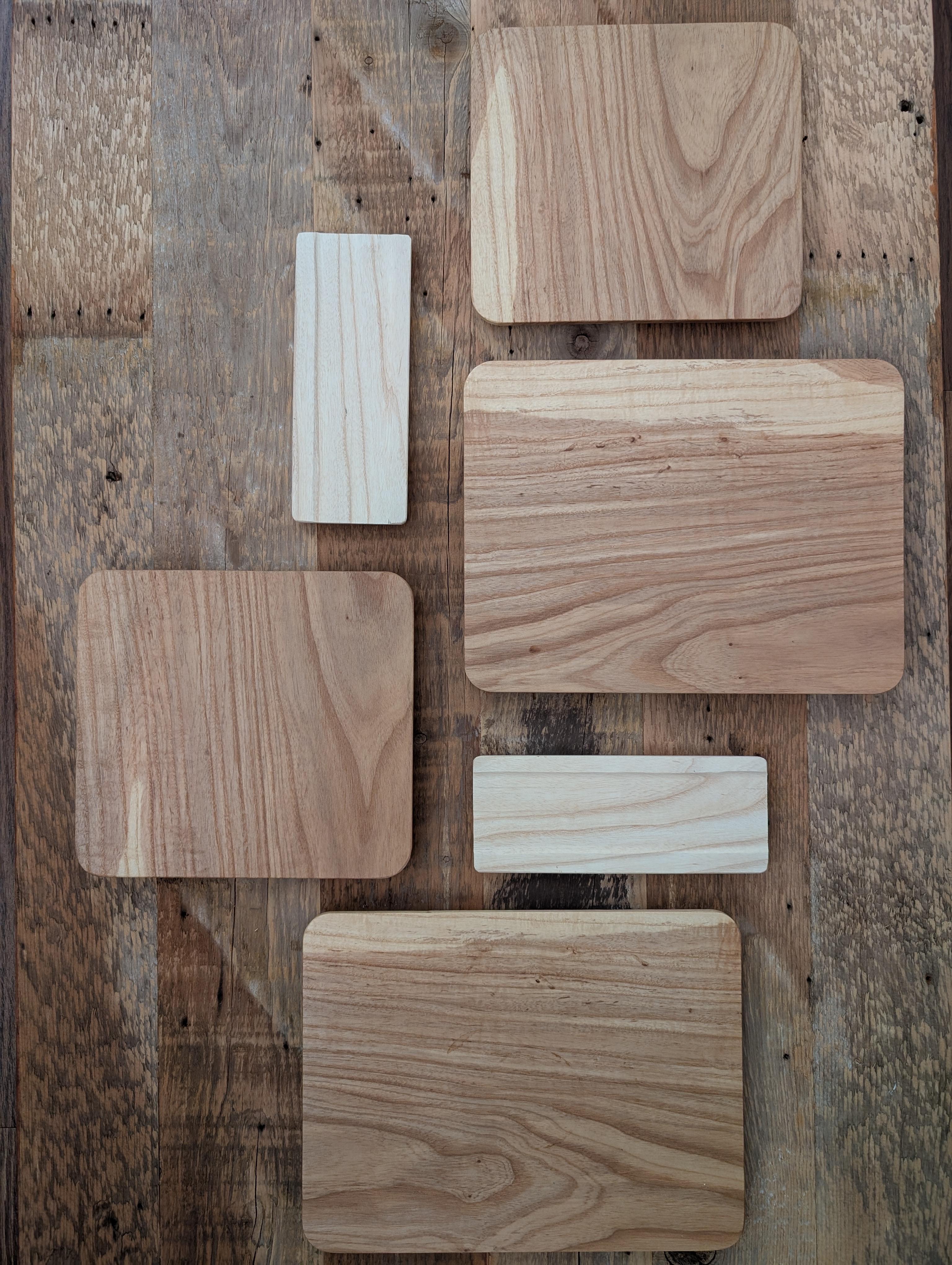
    I created these trays to be more than just a place to put things. They’re a tool for clarity and control. Their various sizes, thicknesses, shapes, and textures break up a surface, encouraging a habit of organization for your everyday items.

    • They give structure. The defined edges and flatness transform a chaotic tabletop into an orderly workspace.
    • They bring a sense of calm. Seeing all your essentials neatly arranged in an aesthetically pleasing way makes you feel in control, even when a task feels overwhelming.
    • They are beautiful on their own. Even when empty, the trays bring a sense of order and warmth to your space. You’ll never feel the need to hide them away.

    My knolling trays aren’t just about making your space look better; they’re about helping you find a sense of calm and focus. They turn a messy surface into a source of inspiration and control.

    Swipe left and right to see how I knolled today.

    A Tray is a Tray… So Why Buy One?

    It’s easy to look at a tray and think you can just make one yourself. While a tray might seem like a simple object, the reality is that the best home accessories are made with intention.

    You can certainly find or build a simple solution to hold your things, but the design and craftsmanship of a dedicated set of knolling trays make all the difference.

    • Thoughtful Design: Knolling trays by Tim B Studio aren’t just flat surfaces. I consider the pleasing sizes and shapes to segment a workspace, encouraging you to interact with your items in an intentional, organized way. The specific dimensions and subtle details are what transform a simple object into a tool for focus.
    • Craftsmanship and Quality: These are pieces built to last. I’ve selected beautiful, durable hardwood and finished them to stand up to daily use while still looking elegant. The smooth textures and natural grains are a constant, tactile reminder of quality and care.
    • Aesthetic and Purpose: My trays are designed to be seen. Unlike a plain box or a quick DIY fix, they are an extension of your personal style and a testament to your commitment to a more organized, mindful life. They add a quiet structure to your surroundings, making your space not only functional but also a source of pride.

    This isn’t about simply containing clutter; it’s about investing in a habit. It’s about surrounding yourself with beautiful, well-made objects that inspire a sense of calm and control.

    When you buy one of my knolling trays, you’re not just purchasing a piece of wood—you’re getting a meticulously crafted tool to help you find your focus, one perfectly-placed item at a time.

    A Commitment to Craft and Community

    When you buy one of my knolling trays, you are not just getting a beautiful, functional object. You are also supporting local woodworking and a commitment to sustainability.

    Each tray is created from hardwood offcuts, sourced right here in the Twin Cities. I work with species native to the area, including ash, hickory, elm, white and red oak, and maple. This ensures that high-quality wood that might otherwise be discarded gets a new life.

    The trays are finished with all natural shellac, a simple and non-toxic finish that is easy to repair and emits no harmful VOC gases.

    * * *

  • Practice knolling with wood rocks

    The idea of knolling is simple: it’s the practice of arranging objects on a flat surface in a grid-like pattern to create visual harmony. Think of a perfectly organized toolbox or a beautifully laid-out workbench. It’s an act of ordering which makes me feel calm and focused.

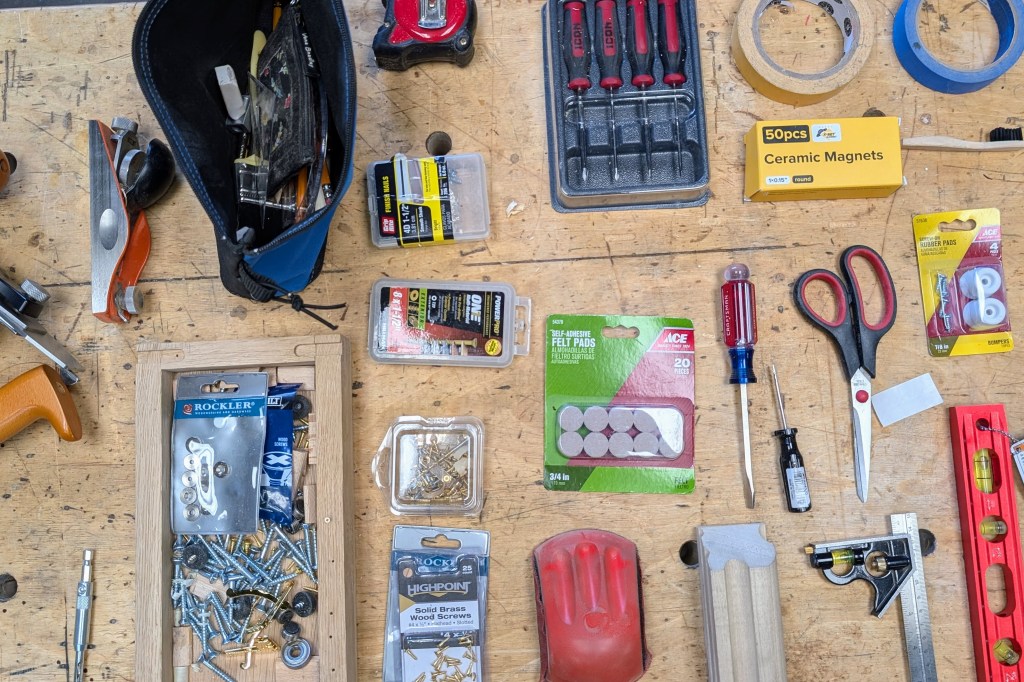
    Knolling tools on a workbench.

    But what if you didn’t have to find order? What if I created it from scratch?

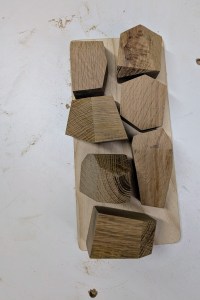
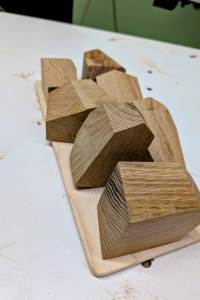
    I always have wood cut offs and found myself in the shop, cutting and sanding them into different shapes and sizes. It ended as a set of simple, smooth wooden “rocks.”

    Then I placed them on a small tray on my kitchen table, arranging them in a clean, grid.

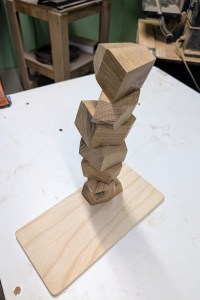
    When I felt overwhelmed or my handed needed to do something, I found myself going to the tray, knocking the rocks over, and then carefully balancing and stacking them.

    It was a tangible, low-stakes way to engage my hands and mind without the baggage of real-world tasks. I wasn’t trying to organize the chaos of my life; I was creating a temporary order.

    The prototype set I made for my daughter became a tool for her to play, calm down, and focus. Now, I’m developing a full set of Knolling Rocks to share with others. My hope is that they can be a simple, beautiful tool for anyone looking for a moment of calm and focus.

    The world is full of things to be done and problems to be solved. Sometimes, what we really need is a simple, beautiful problem we can solve with our own hands. Something we can knock over, rearrange, and put back together again—just for the joy of it.

    * * *