writing

  • Compact desk inspired by monks

    I have disliked my flat-packed, fast furniture computer desk for over twenty years and have drawn many desk ideas to replace it. My social media feeds are full of desk setup ideas and hacks, from gaming rigs to multi-monitor home offices.

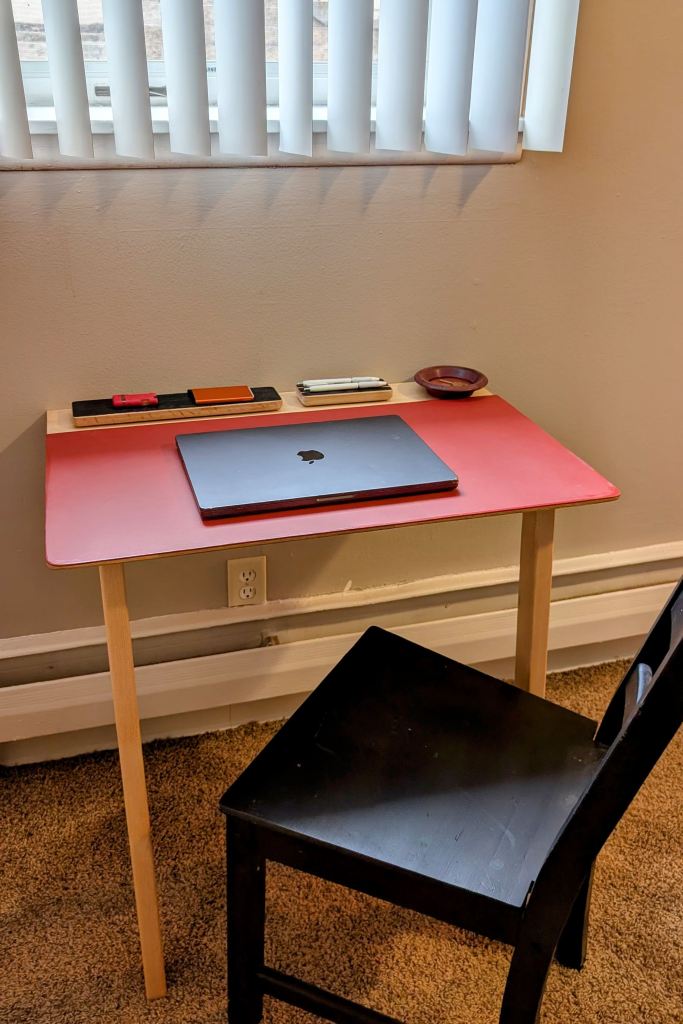
    I just recently gave up on complexity and settled on simplicity. The idea for this desk is to pare it down to its essentials. Inspired by lecterns and writing desks used by monks, I wanted just enough space to write, sketch, and use my laptop.

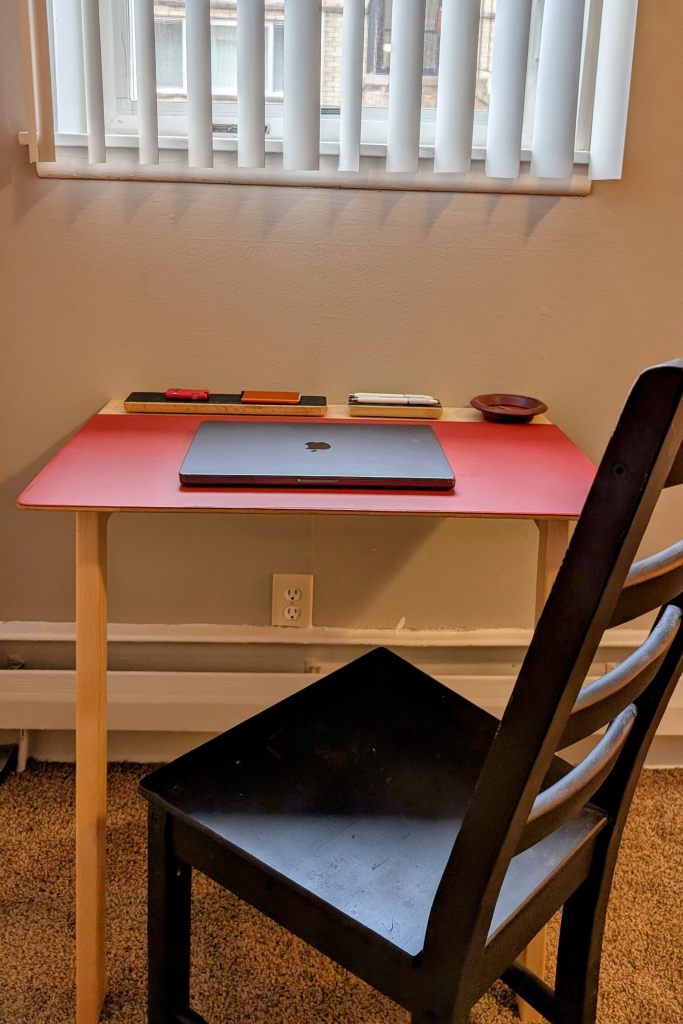
    This desk has only two legs tapered to lean against the wall for support. The back apron is wide, lays flat against, and provides more than enough stability for sketching, typing, and writing.
    It seems that all work furniture is engineered so you can sit down all day. This concept seems wrong, especially for someone who deals with ADHD hyperfocus, as it can lead to prolonged states of concentration without breaks, which can be counterproductive and exhausting.

    I wanted a desk that was designed to be used for a couple of hours but also encourages movement and change in perspective. This design features only a top and two legs, making it eminently portable. It can be easily moved to a new location. This flexibility not only inspires creativity but also promotes a dynamic working environment.

    This design was challenging. After 20 years of collecting ideas for desk features in notebooks, I found myself unable to create a replacement. I was overwhelmed by possibilities and realized I should only build what I needed.

    This compact desk is ideal for a dorm or apartment or small office, providing an efficient workspace without taking up too much room. Constructed from sturdy white maple, it ensures durability while maintaining a sleek aesthetic. The writing surface is elegantly covered with furniture linoleum, making it not only stylish but also easy to clean and maintain.

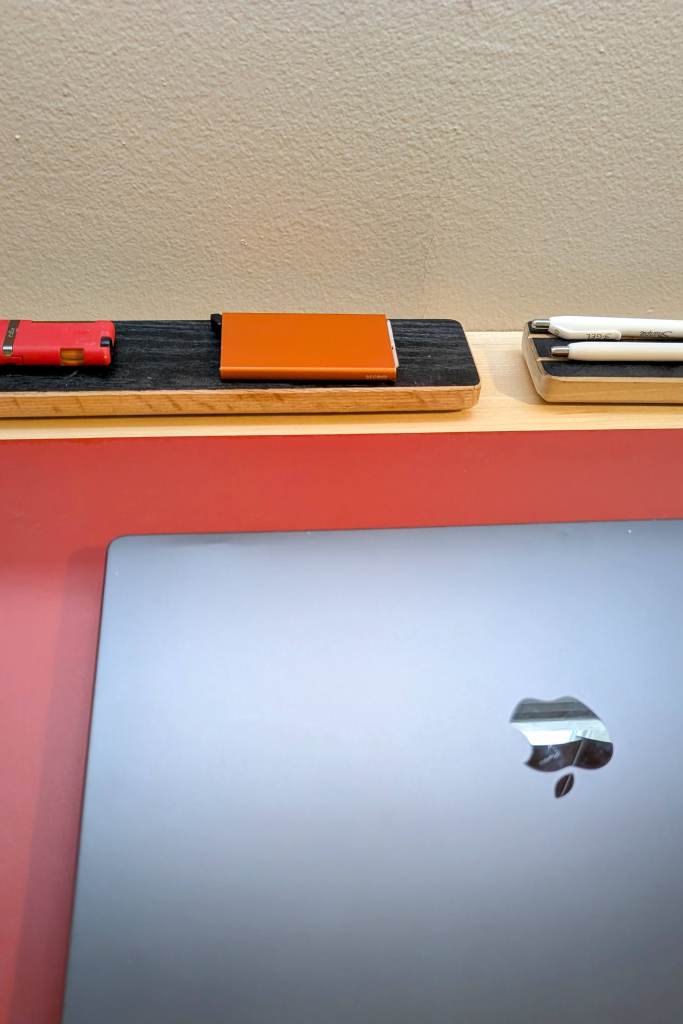
    While there are no drawers or trays integrated into the design, the back of the desktop is cleverly segmented off, offering a perfect spot for organization. I placed two knolling trays and a small bowl there, creating space for storing essential items like pens, notes, and other stationery. I believe limited storage focuses the mind.

    This thoughtful design makes it a practical addition to any small living or work space, encouraging productivity while keeping your essentials within easy reach.
    * * *

  • Chairmaking is different

    Chairs seem simple. But I found that making a chair is a distinct craft. Most furniture is a variation on a box. While a chair is most definitely not a box.

    It forms to the human body and also endures more abuse than most other furniture. A well made, comfortable, and beautiful chair is a treasure. Most designers can be identified by a chair.

    The Lounge Chair

    In March 2026, I set out to make my first chair. And I understand why most woodworkers don’t make chairs. They are hard and risky and subjective.

    You can spend the time, perfect every joint, and still end up with a useless piece. And unlike other furniture, a chair is not rightly judged by a photo. It only succeeds when a person is seated on it.

    The Idea

    A chair’s form changes based on the occasion. Eating, working, or relaxing demand different outcomes. For this project, I wanted to engage with the modern culture of relaxing. It needed to be just comfortable enough without promoting sleep or sloth. It should comfort the body, but enlist the mind.

    I settled on making the main feature a wood seat. I wanted to feel the center of my body sink into the chair, so I recede from my surroundings. This is what I want to achieve when I relax. If I can disengage from the place I am seated, then I can focus inside myself.

    The DEsign and the Making

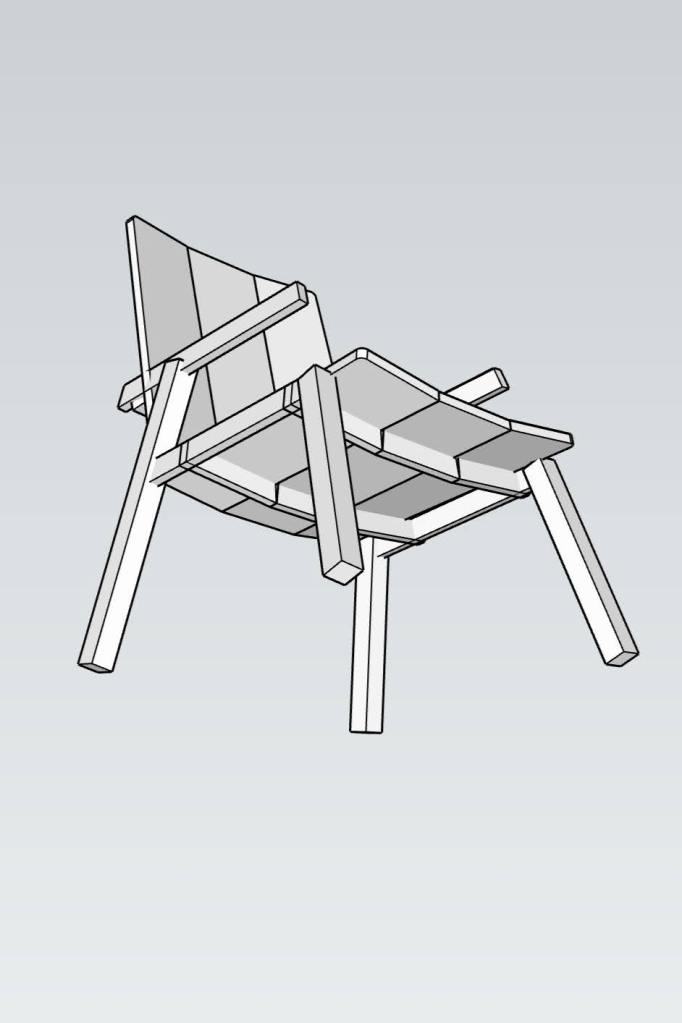
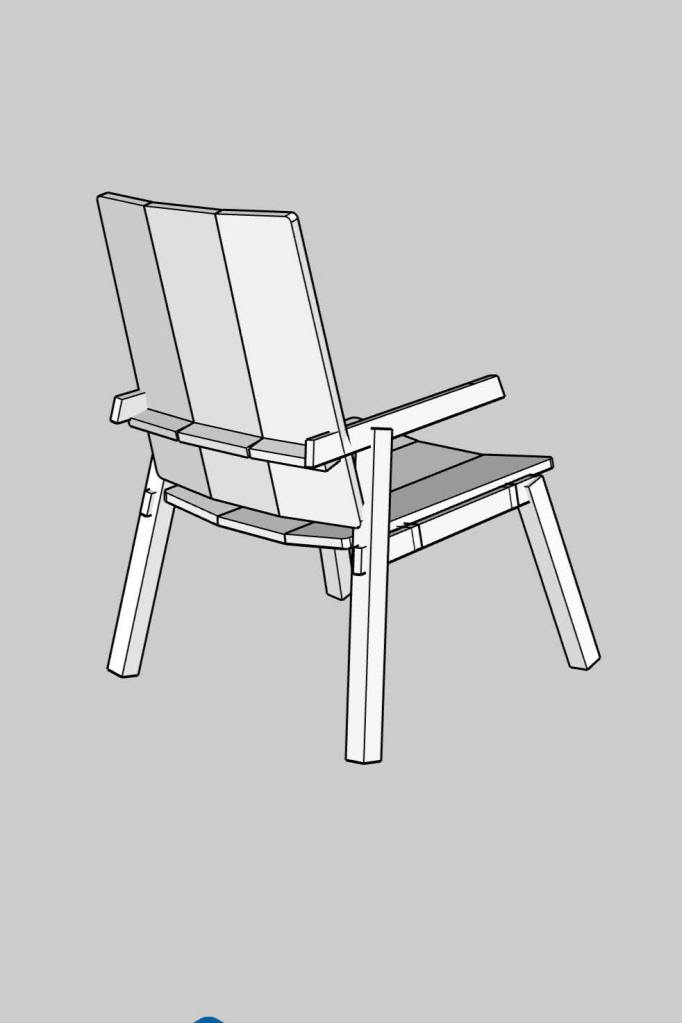
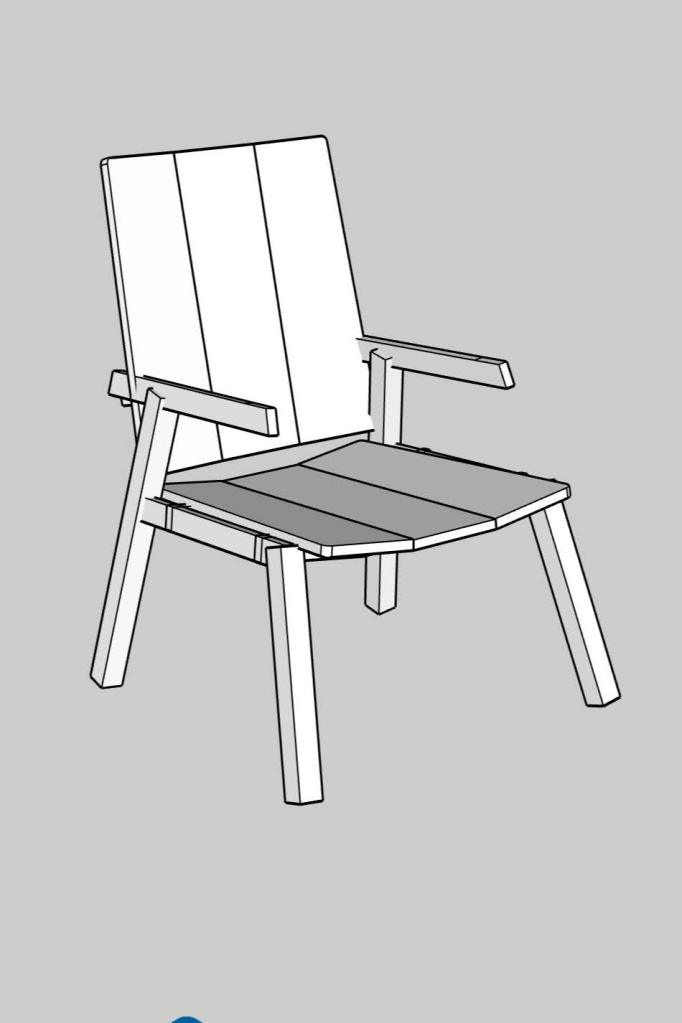
    I started with a concept for the back and seat. Then I worked how to engineer how to support the human body in space. The structure acts like a cradle to position the seat at the right height and angle off the ground. When seated, your center settles to the back but you do not feel reclined.

    Idea for back and arms
    Concept for seat and back
    Sketch of leg frame

    As the build photos show, I wondered from this sketch in many ways as I explored materials and proportions as they related to the human form. The seat is 17 inches deep and the back is 19 inches tall at a 110° angle. At the front it is 17 inches off the ground and reclined at a 108° angle. The seat is 20 inches wide.

    In Situ

    It is a large, imposing chair requiring a lot of negative space. Positioned in a corner nook, it works best near a small drinking table or low coffee table. My choice of materials contrasts the softness of a dark wood like cherry or walnut for the seat against a rigid architectural material like oak for the frame. The seat will get a nice patina over time and wear, and small dents will add character.

    The Result

    My first chair is over engineered, but that feels expected. It sits better than expected. The next version will use less material and complexity.

    * * *